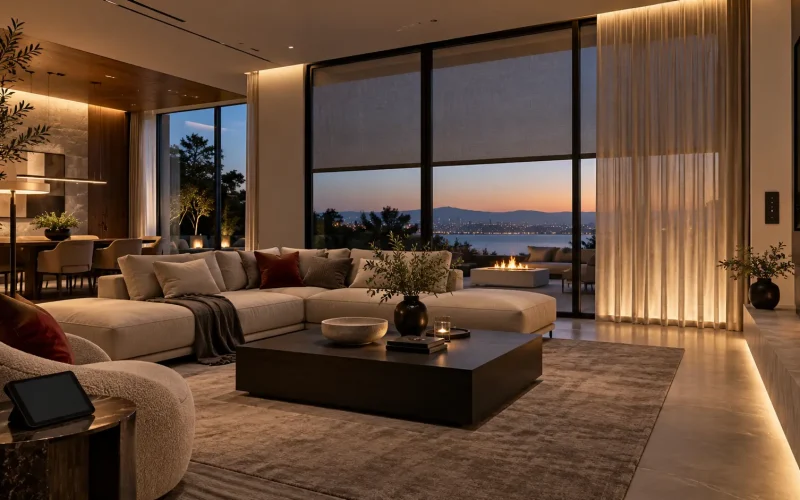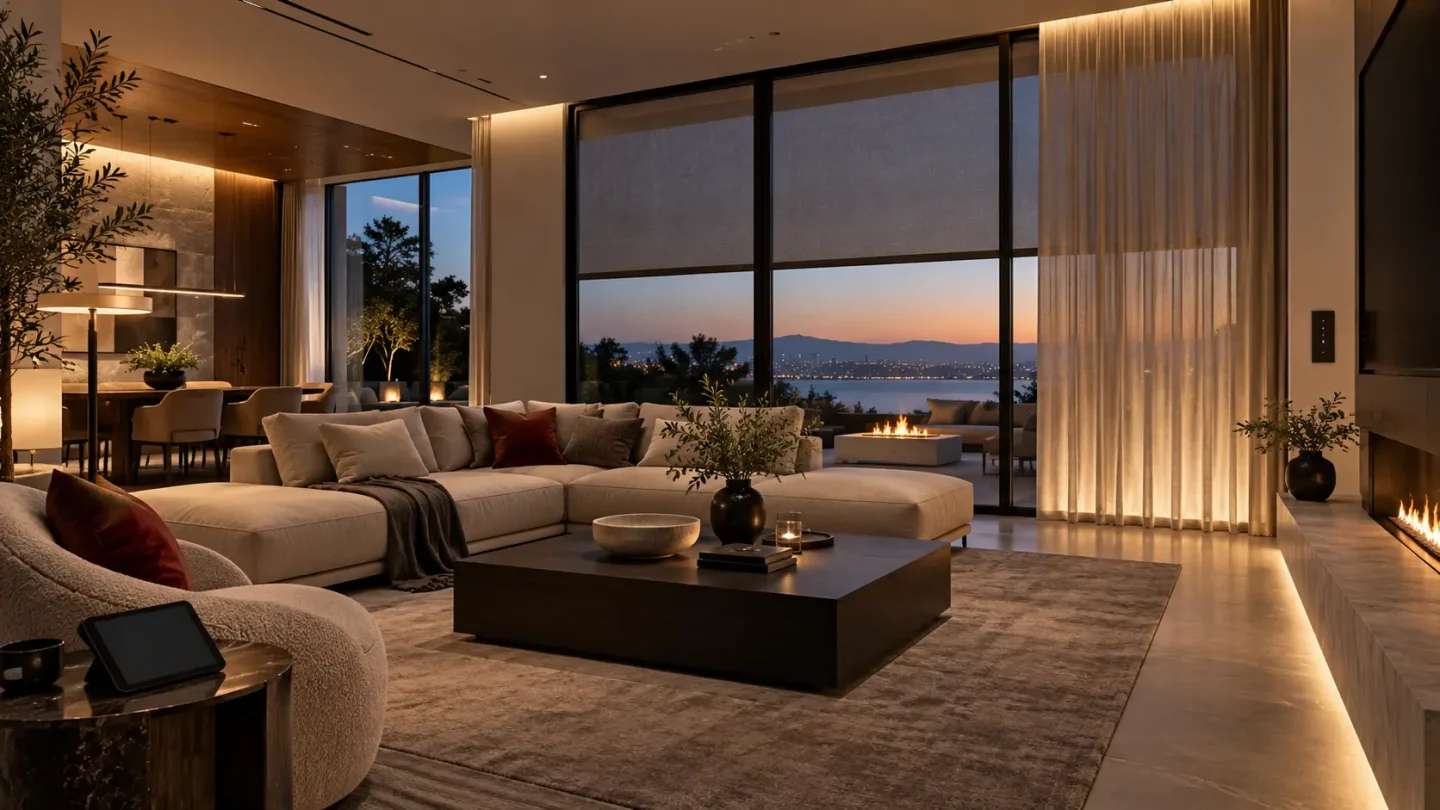
Lighting and curtains are often specified by different teams, yet they shape the same room. In the morning, daylight may do most of the work. In the evening, privacy and gentle lighting become more important. Planning the two together can make controls easier to understand and reduce the number of separate actions needed throughout the day.
Start with the windows and furniture
Record window dimensions, curtain stacking space, pelmets and furniture positions. A curtain motor or track must suit the opening and the selected fabric arrangement. Confirm access for servicing and how the curtain will be operated manually if required. These details should be agreed before the ceiling or joinery conceals the installation.
Check lighting compatibility early
A dimmable fitting needs a compatible driver and control method. Do not assume that a dimmer selected later will work well with every decorative lamp or LED driver. Ask the lighting supplier and automation installer to verify the proposed combination, including behaviour at low levels and the desired response when a scene changes.
Make scenes specific to the room
A living-room scene might lower selected shades and bring on lamps and wall lighting for conversation. A bedroom scene may use different curtain and bedside-light settings. Avoid applying the same command to every room simply because the devices can be grouped. Consider who uses each space and allow people to adjust it when their routine changes.
Commission in daylight and after dark
Review the installation at different times, not only during a daytime site visit. Check privacy, reflections on screens and how the lighting feels from the actual seating positions. Agree simple button labels with the household. Well-chosen controls should explain themselves; a long list of technical device names makes an otherwise useful system harder to enjoy.