
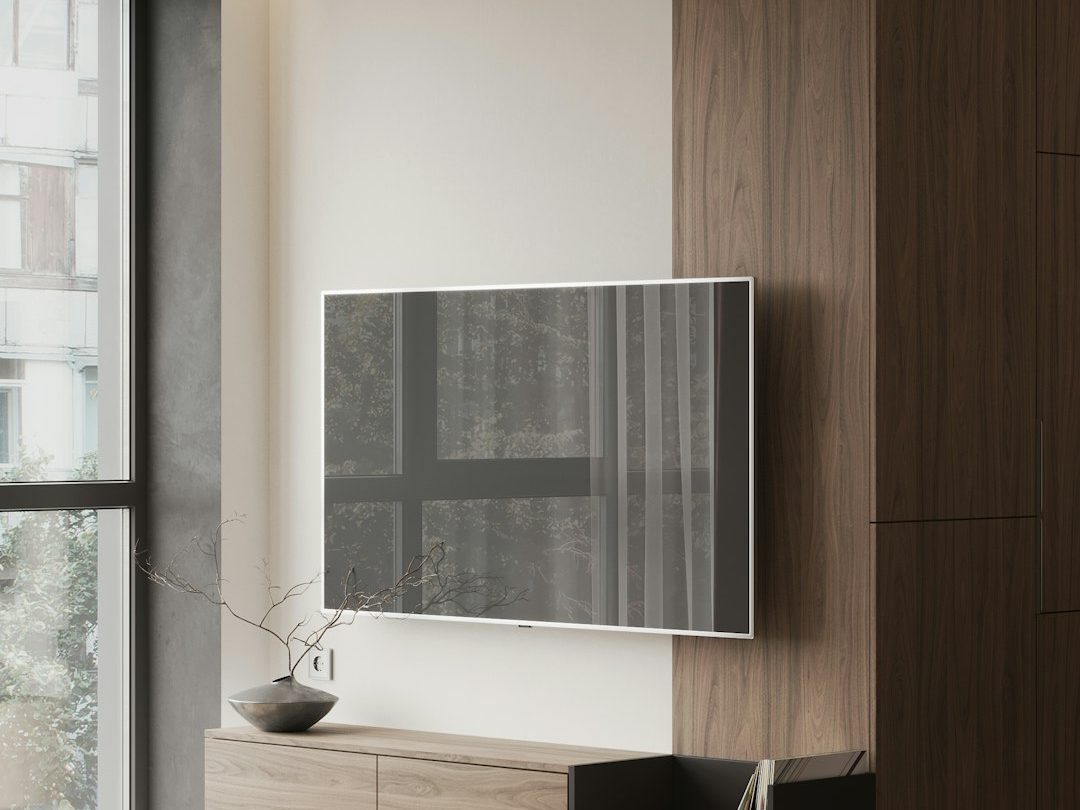
A large picture is useful only if it suits the room and the way you watch. A television can be a practical everyday display; a projector may suit a larger cinema image when the space supports it. Begin with daylight, seats and installation access before comparing model specifications.
A useful starting point: for frequent daytime viewing in a shared living room, assess a television first. For a dedicated movie room with controllable light, assess a projector and screen together. Neither choice automatically determines the sound system; audio still needs its own room plan.
Compare your two most common viewing situations
Describe a normal weekday and a film evening. Is the room used with curtains open? Do family members walk through it? Will someone watch news or sport while others use nearby spaces? These questions can change the best display choice more than an impressive showroom image.
During a demonstration, ask about conditions comparable to your home. A dark-room image does not establish how a display will look with your windows and lighting. Bring photographs taken at the times you usually watch.
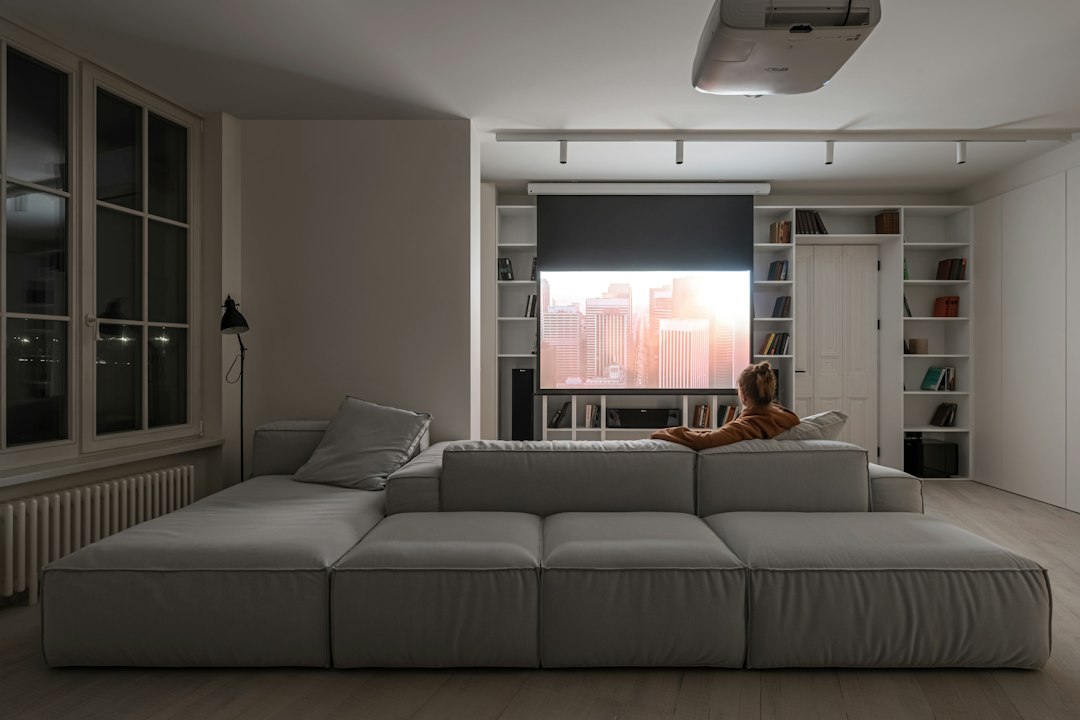
Illustrative reference image; not an AHL installation.
Check the whole installation
| Decision | TV setup | Projector setup |
|---|---|---|
| Placement | Check wall or furniture support, mounting and sightlines. | Check the selected projector’s throw requirements, mount, screen and obstructions. |
| Room light | Review reflections and viewing conditions. | Review light control and the screen/projector combination. |
| Infrastructure | Plan power, signal connections and access behind the display. | Plan power, signal route, ceiling access and service clearance. |
| Audio | Confirm room for the centre speaker or chosen audio system. | Coordinate speaker positions with the screen and seating. |
| Complete cost | Include display, mount, installation and any furniture work. | Include projector, screen, mount, installation and any room changes. |
Choose the screen from the seats
Mark the main seat and the seats used by guests. Check the proposed image position from each one, including reclining positions. Do not select the largest size that fits the wall before checking comfortable viewing and sightlines.
For a projector, the exact model and lens determine the installation possibilities. Ask the designer to verify the available position against the manufacturer’s guidance. Avoid committing to a ceiling point or joinery opening based on a generic projector assumption.
Do you need both a television and a projector?
A dual-display arrangement can serve different viewing habits, but it also adds equipment, cable routes and operating decisions. Write down the use case for each display before adding both. If one would rarely be used, a single well-planned display may be the more sensible investment.
Where both are justified, agree source routing, controls and how the room changes between modes. Check that screens, curtains and speakers do not obstruct one another. Ask the household to try the switching process before sign-off.
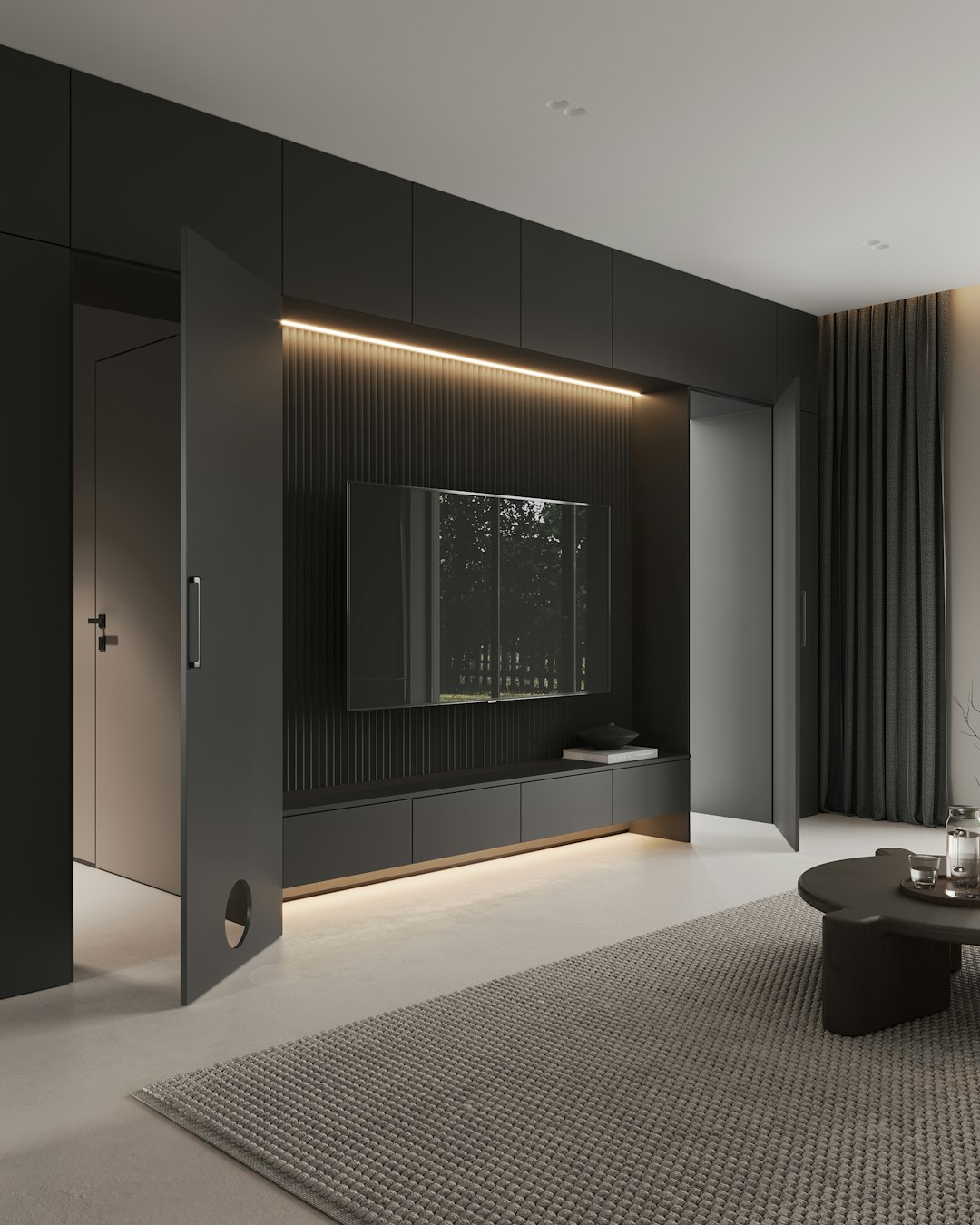
Illustrative reference image; not an AHL installation.
Keep the sound decision separate
A projector does not automatically require more audio channels, and a television does not limit you to a soundbar. The available speaker positions, main seats and listening preferences should drive that choice. Check the connections and format support of the actual TV, source devices and audio equipment together.
Use familiar dialogue and music in a demonstration. If clear everyday use matters more than an elaborate room, tell the installer. Complexity that the family avoids is poor value, even when the equipment itself is capable.
What to bring before choosing
- Room length, width, ceiling height and main viewing distance.
- Photographs showing windows, curtains and current furniture.
- Exact models of equipment you hope to retain.
- Your typical viewing times, content and number of viewers.
- Budget, project stage and acceptable level of installation work.
Explore home theatre installation in Pune or arrange a Focal audio demonstration. Confirm which display arrangements are available to inspect when booking; showroom availability can change.